Introduction
For decades, ADD/ADHD was viewed as a condition that primarily affected boys. Loud, restless, disruptive boys who could not sit still in class. This image shaped how doctors, teachers, and parents understood the condition. And it left millions of girls with ADD/ADHD undiagnosed, misunderstood, and quietly struggling for years.
Today we know better. ADD/ADHD affects girls just as often as boys. But it presents differently. So differently that many girls are not diagnosed until their late teens, twenties, or even later in adulthood. By that point, they have spent their entire school career feeling like something is wrong with them without knowing why.
After more than thirty years of working with children who have ADD/ADHD, I have watched this pattern play out again and again. A bright, sensitive girl struggles quietly. Her parents wonder why she cannot focus, why she is so hard on herself, and why she feels overwhelmed by things her peers handle easily. And no one recognizes what is actually happening.
This guide is written for those parents. It explains how ADD/ADHD looks different in girls compared to boys, why girls are so often missed, and what to do if you recognize the pattern in your daughter.
How ADD/ADHD Presents Differently in Boys
Most people can picture what ADD/ADHD looks like in a boy. Restless energy. Difficulty sitting still. Impulsivity. Blurting out answers. Interrupting others. Getting into trouble at school for talking too much or leaving his seat. These are the visible, external signs that teachers and parents easily notice.
Boys with ADD/ADHD often have the hyperactive and impulsive presentation, which is much easier to identify. Because their symptoms disrupt classrooms and family life, they are typically identified early. Most boys with ADD/ADHD are diagnosed by elementary school.
This early identification is not always a good thing (many boys are misdiagnosed or over-medicated), but at least the conversation happens. Their struggles are seen.
How ADD/ADHD Presents Differently in Girls
Girls with ADD/ADHD often present very differently. They are more likely to have the inattentive type of ADD/ADHD, which is quiet, internal, and easy to miss. Instead of running around the classroom, they are staring out the window. Instead of blurting out answers, they are quietly falling behind.
Here is what ADD/ADHD often looks like in girls.
Daydreaming and mental drifting
A girl with ADD/ADHD may appear to be listening but is actually somewhere else in her mind. She looks polite and attentive but cannot recall what was just said.
Chronic disorganization
Her backpack is a mess. Her homework gets lost. Her room is always chaotic despite her best efforts. She tries to be organized, but the systems never stick.
Emotional intensity
Girls with ADD/ADHD often feel emotions more deeply than their peers. Small disappointments feel enormous. Social conflicts are devastating. Criticism cuts deeply and lingers.
Perfectionism and anxiety
Many girls with ADD/ADHD develop perfectionism as a coping mechanism. They work twice as hard as their peers to appear normal. This masks their struggle but creates crushing anxiety underneath.
Social exhaustion
Girls with ADD/ADHD often mask their symptoms in social situations, performing normally all day at school. By the time they get home, they are emotionally drained and often melt down at home in ways that surprise their parents.
Constant self-criticism
A girl with ADD/ADHD often becomes her own harshest critic. She internalizes her struggles as personal failings. I am lazy. I am stupid. Something is wrong with me. These thoughts become the background music of her life.
Difficulty finishing tasks
She starts things with enthusiasm but rarely finishes. Books unread. Projects abandoned. Journals half-filled. Not because she does not care but because her brain has moved on before she could complete the task.
Why Girls Get Diagnosed So Late
Several factors combine to keep girls with ADD/ADHD invisible.
They do not disrupt classrooms.
Because girls tend to have the inattentive presentation without the hyperactivity, they do not draw teacher attention the way boys do. A quiet daydreamer does not get sent to the principal. She just fades into the background of a busy classroom.
They compensate through effort.
Many bright girls with ADD/ADHD work incredibly hard to keep up. They spend hours on homework their peers finish quickly. They study twice as long for tests. This effort masks their struggle. From the outside, they appear to be succeeding when they are actually exhausted.
They are diagnosed with other things first.
Because their emotional intensity and anxiety are so visible, girls with ADD/ADHD are often diagnosed with anxiety disorders, depression, or perfectionism before anyone considers ADD/ADHD as the underlying cause.
Diagnostic criteria were built around boys.
The original research on ADD/ADHD was conducted primarily on boys. The diagnostic criteria reflect how boys present. This means girls who do not fit the boy pattern often do not meet the checklist criteria, even when they clearly have the condition.
What Late Diagnosis Costs Girls
When ADD/ADHD is not identified in girls until adolescence or adulthood, the emotional cost is enormous. By the time diagnosis happens, many girls have spent a decade or more believing they are:
• Not smart enough
• Not disciplined enough
• Fundamentally broken in some way
• Failures despite trying their best
This internal narrative shapes their identity. It affects their confidence in college, in careers, and in relationships. Some girls develop eating disorders, self-harm behaviors, or severe depression as they try to cope with challenges they do not understand.
Early identification changes this trajectory completely. When a girl learns at age eight that her brain works differently, and when she is given tools and support that match how she actually learns, the entire path forward changes.
Signs Your Daughter May Have Undiagnosed ADD/ADHD
If you are the parent of a girl and you recognize these patterns, an evaluation may be worth pursuing.
• She works significantly harder than her peers for the same academic results
• She is highly emotional, especially around perceived failures or criticism
• She has difficulty finishing tasks she starts
• She is chronically disorganized despite trying to stay organized
• She appears to daydream or mentally check out during instruction
• She holds herself to impossibly high standards
• She melts down at home after keeping it together at school all day
• She struggles with friendships or social overwhelm
• She has trouble following multi-step instructions
• She has a family history of ADD/ADHD or learning differences
Any single sign on its own is not diagnostic. But if several of these patterns describe your daughter, a proper assessment can bring the clarity your family has been looking for.
The Right Kind of Assessment for Girls
Because girls with ADD/ADHD often mask their symptoms and present with anxiety or perfectionism, a quick screening at school will often miss them. What girls need is a comprehensive brain health assessment that looks at how their brain actually processes information, manages attention, regulates emotion, and stores memory.
This is exactly what our Assessment Division provides. We look beyond the surface behaviors and identify the underlying patterns. For girls specifically, this means looking at inattention, emotional regulation, Executive Function, and processing differences. It means understanding your daughter as a whole person, not checking off symptoms from a list built around boys.
What Girls with ADD/ADHD Need in School
Once identified, girls with ADD/ADHD thrive when they receive the right educational support. This includes:
Small class sizes
Girls with ADD/ADHD do not need bigger schools with more resources. They need smaller classrooms where they can be truly seen. A class of six to eight students, as we have at Teach With Love MicroSchool, allows every girl to be known by her teacher every day.
Emotionally attuned teachers
Girls with ADD/ADHD carry a heavy emotional weight. They need teachers who understand this, who do not punish emotional intensity, and who help them build regulation skills without shame.
Non-medicated, natural approaches
Many families do not want medication as the first line of intervention for their daughter. At Teach With Love, we treat neurodivergent children and children with Executive Function issues naturally, without medication. Our approach focuses on the environment, instruction, and skill building.
Executive Function coaching
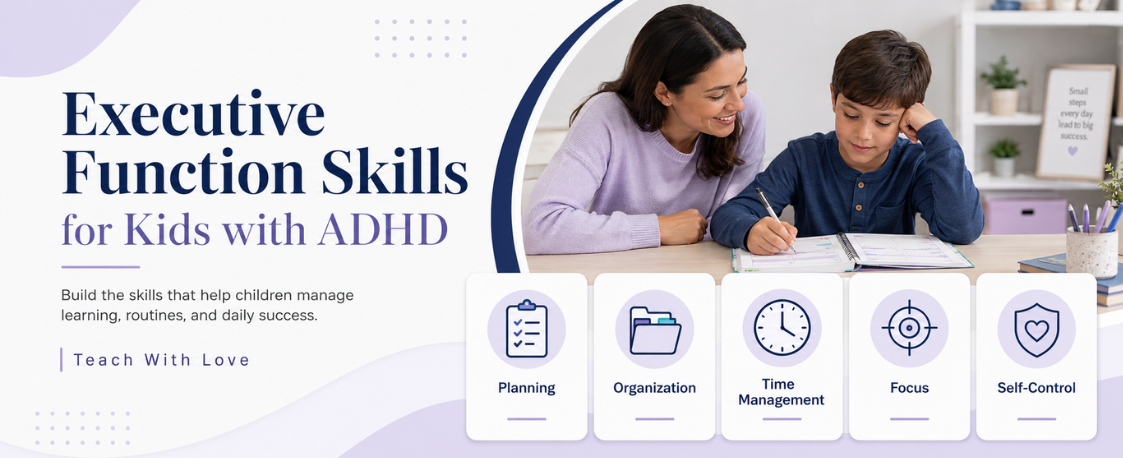
Girls with ADD/ADHD need daily support building the Executive Function skills that do not develop naturally. This includes time management, organization, task initiation, and emotional regulation.
Freedom to be themselves
Perhaps most importantly, girls with ADD/ADHD need to be in an environment where they can stop pretending. Where being different is not a source of shame. Where their unique brain is understood and celebrated.
A Path Forward for Your Daughter
If you recognize your daughter in this article, the most important thing you can do is take action. Not tomorrow. Today. Every additional year she spends believing something is wrong with her adds weight to her adult life.
Schedule a free consultation with our team. We will listen to your family’s story, ask the right questions about what you have been seeing, and help you understand whether an assessment or educational change makes sense for your daughter.
For Florida families, the Family Empowerment Scholarship can cover the cost of enrolling your daughter at Teach With Love MicroSchool. For Texas families, TEFA funding is available. For Nashville families and those across Tennessee, the Education Savings Account program provides similar support.
Your daughter is not broken. Her brain works differently, and that difference has been misunderstood for far too long. With the right identification, the right education, and the right support, she can go from struggling silently to genuinely thriving. That is what every girl deserves.